

Training & Behaviour Readiness
Training readiness is about whether your pet has learned the skills needed to travel safely.
Good health and good setup are not enough if your pet does not understand what to do in new or changing environments.
This category focuses on the behaviour skills that help pets move safely and cope in vehicles, yachts, campsites, and unfamiliar places.
These skills also support safety during unexpected situations, where pets may need to be handled or controlled quickly.
This includes:
● toilet and hygiene behaviour
● movement and position skills
● settling and rest skills
● motion and noise tolerance
● handling and control acceptance
● safety boundaries and awareness
Training develops gradually. Skills should be reliable in calm conditions before adding movement, noise, or distraction.
Some training skills also support emergency situations where pets may need to be guided, restrained, or moved quickly.
Training & behaviour readiness areas
Review the skills your pet may need to move, settle and respond safely during travel. Open each area to understand what good readiness looks like, where gaps may exist, and what training may need further work.
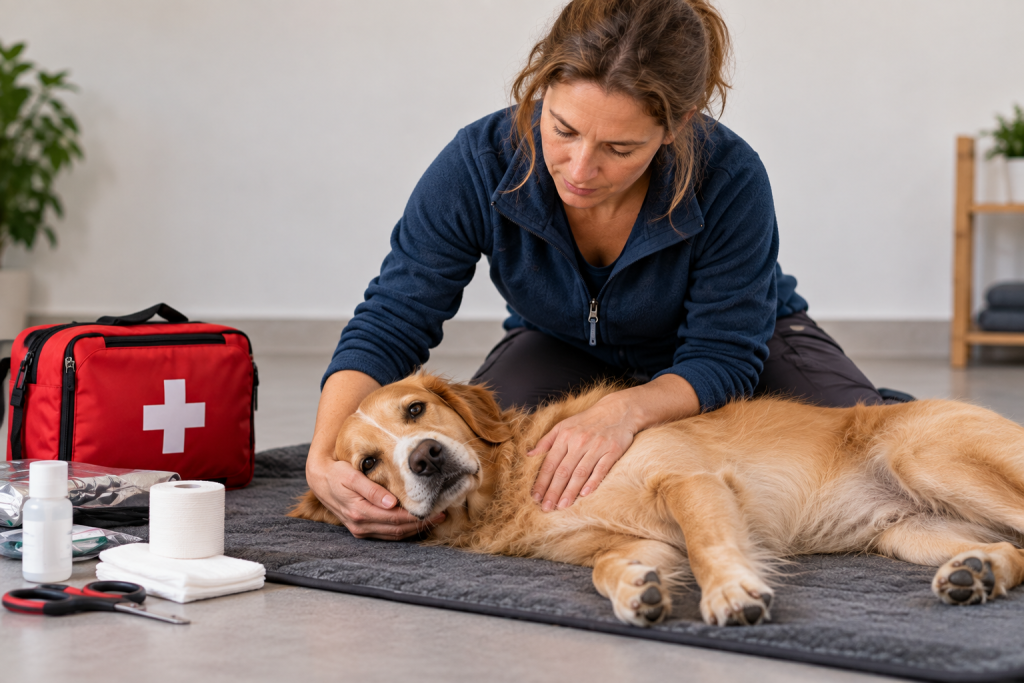
First-aid training
Do I have the skills to provide first aid for my pet in an emergency?
Prepare & learn the first-aid skills needed to respond to a pet emergency — wherever you are
First-aid training readiness
Builds the practical skills needed to recognise and respond to a pet emergency.
🌍 All Travel Environments
What must be in place
✅ ability to check responsiveness and breathing
✅ ability to recognise when immediate first aid may be needed
✅ ability to protect yourself and approach an injured or distressed pet safely
✅ ability to check and maintain an airway
✅ knowledge of CPR and rescue breathing
✅knowledge of how to respond to choking
✅ ability to control serious bleeding and protect wounds
✅ knowledge of how to respond to seizures or convulsions
✅ ability to recognise and respond to heat-related emergencies
✅ awareness of poisoning and other common emergency risks
✅ ability to monitor the pet and recognise deterioration
✅ knowledge of when and how to seek veterinary help
✅ familiarity with the first-aid equipment you carry
✅ ability to record and communicate important information for veterinary handover
What can go wrong if not in place
⚠️ delayed recognition of a life-threatening emergency
⚠️ delayed or incorrect first-aid response
⚠️ inability to perform CPR, rescue breathing or choking response when required
⚠️ uncontrolled bleeding or avoidable deterioration
⚠️ unsafe handling of an injured or distressed pet
⚠️failure to recognise when the pet’s condition is worsening
⚠️delayed veterinary contact, transport or handover
What new risks or pressures this may create
ℹ️️ first-aid training does not replace veterinary care
ℹ️️ skills may deteriorate if they are not reviewed or practised
ℹ️️ inappropriate intervention may cause harm or delay the correct response
ℹ️️ techniques may differ according to the pet’s size, body shape and condition
ℹ️️ personal safety must take priority where the pet, environment or situation creates a danger
Training & Familiarity
First-aid skills should be learned before an emergency occurs and reviewed periodically.
Practise safe skills such as assessment, positioning, locating equipment and working through emergency scenarios. Techniques that could injure a healthy pet should only be simulated rather than physically performed.
Related systems to check
● tether points & attachment points ● barriers & separation between areas ● safe escape routes
Ready to work on this area?
Find guides, checklists, how-to guidance and pathway-specific advice.
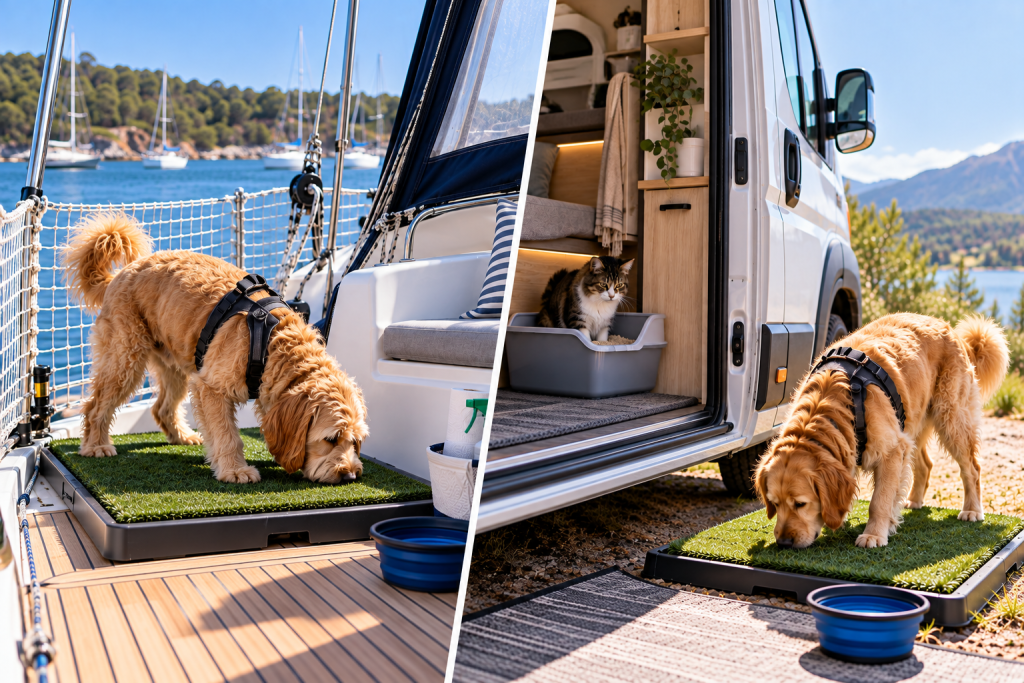
Toilet & hygiene training
Can my pet toilet reliably in the places and conditions we will travel in?
Teaching your pet where and when to toilet in travel environments.
Toilet & hygiene readiness
Builds reliable toileting in travel environments.
🌐 All Travel Environments
What must be in place
✅ a clear toileting cue or routine
✅ acceptance of the travel toilet surface (grass, mat, turf, litter, ground area)
✅ ability to toilet on lead where needed
✅ ability to toilet in new locations
✅ tolerance for small or slightly moving areas
✅ predictable holding between opportunities
✅ no panic linked to noise or motion
✅ routine that works in different places
✅ toileting without wandering into unsafe areas
✅ ability to toilet despite mild weather changes
What can go wrong if not in place
⚠️ refusal to toilet causing stress or discomfort
⚠️ accidents inside living areas
⚠️ hygiene problems in confined spaces
⚠️ stress from holding too long
⚠️ disruption to travel plans
What new pressures training may create
ℹ️️ routine becoming too rigid
ℹ️️ surface preference becoming too narrow
ℹ️️ temporary regression in new environments
Related systems to check
● tether points & attachment points ● barriers & separation between areas ● safe escape routes
Ready to work on this area?
Find guides, checklists, how-to guidance and pathway-specific advice.
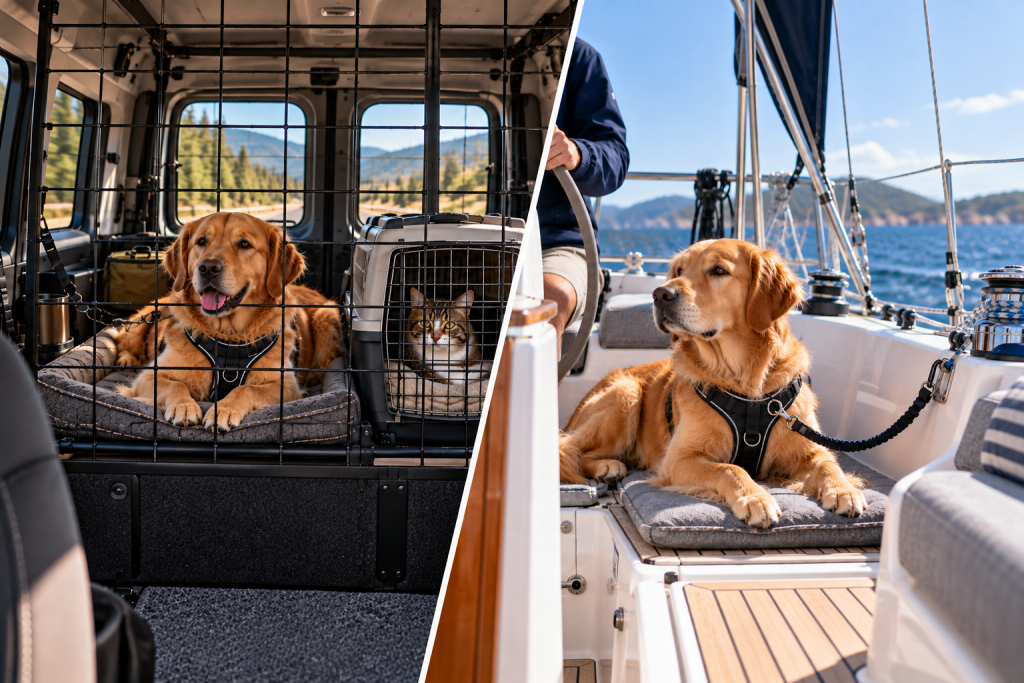
Movement & position skills
Can my pet move safely and stay where they should during activity?
Helping your pet move safely and stay in the right places during activity.
Movement & position skills
Builds safe movement and controlled positioning.
🌍 All Travel Environments
What must be in place
✅ follows safe movement paths
✅ waits before exits or level changes
✅ steps up or down in a controlled way
✅ holds position when asked
✅ does not rush through doors or gates
✅ responds to simple direction cues
✅ can be guided physically without resistance
✅ no uncontrolled jumping from height
✅ stops or pauses when directed
What can go wrong if not in place
⚠️ slips or falls
⚠️ uncontrolled exits into traffic or water
⚠️ collisions with people or equipment
⚠️ panic movement causing injury
⚠️ handler injury from pulling
What new risks or pressures this may create
ℹ️️ over-control reducing confidence
ℹ️️ too much cue reliance reducing independent judgement
ℹ️️ handler strain from constant guidance
These skills may be needed during:
● Recovery from water
● Injury support
● Evacuation or lifting
● Emergency restraint
Practising in calm conditions improves safety if emergencies occur.
Related systems to check
● tether points & attachment points ● barriers & separation between areas ● safe escape routes
Ready to work on this area?
Find guides, checklists, how-to guidance and pathway-specific advice.
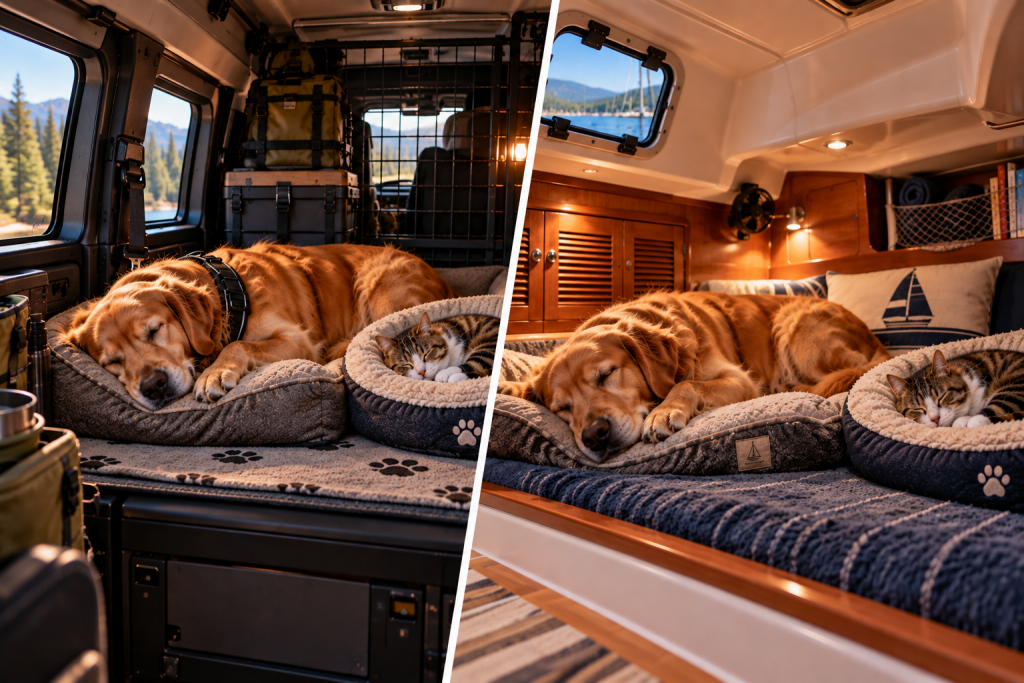
Settling & rest skills
Can my pet relax and rest calmly when nothing is happening?
Teaching your pet to switch off and rest during downtime or travel.
Settling & rest skills
Builds the ability to relax and rest during travel.
🌍 All Travel Environments
What must be in place
✅ can settle in a defined resting space
✅ comfortable in confined areas (crate, berth, vehicle space)
✅ can rest during motion or vibration
✅ calm when activity happens nearby
✅ no constant pacing when inactive
✅ recovers to calm after stimulation
✅ can rest without constant handler contact
✅ comfortable resting in different locations
What can go wrong if not in place
⚠️ anxiety during travel
⚠️ exhaustion from lack of sleep
⚠️ destructive behaviour in confined spaces
⚠️ vocalising or agitation
⚠️ unsafe movement during handler tasks
What new risks or pressures this may create
ℹ️️ over-reliance on one resting location
ℹ️️ reduced independence if too handler-focused
ℹ️️ excess confinement reducing exercise tolerance
Related systems to check
● tether points & attachment points ● barriers & separation between areas ● safe escape routes
Ready to work on this area?
Find guides, checklists, how-to guidance and pathway-specific advice.
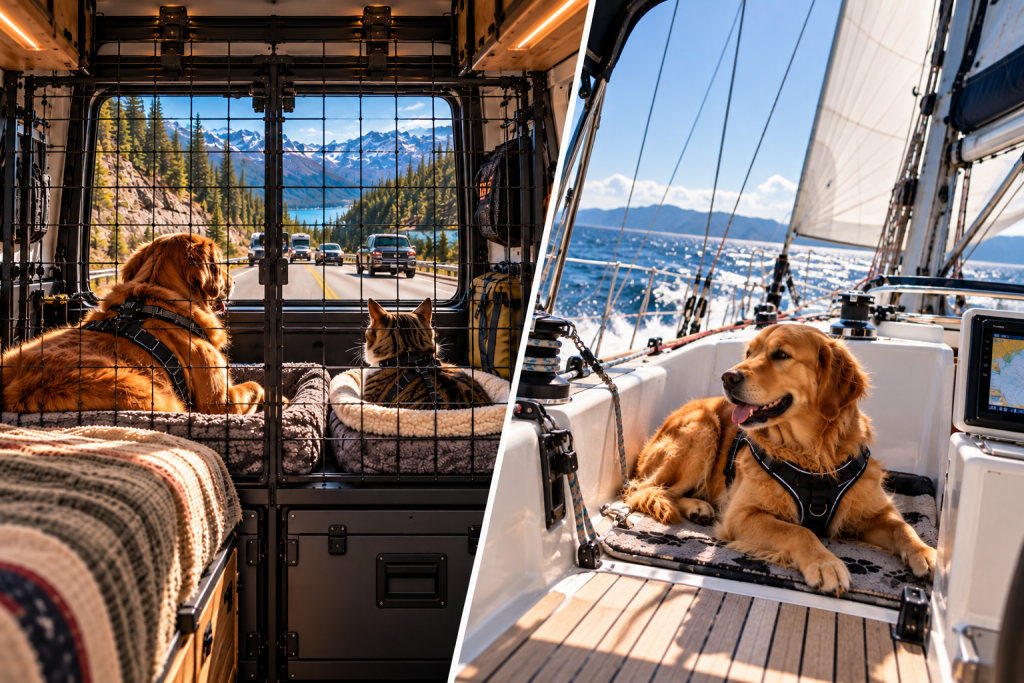
Motion & noise tolerance
Can my pet cope with vibration, motion, and unfamiliar sounds?
Helping your pet stay calm with vibration, movement, and unfamiliar sounds.
Motion & noise tolerance
Builds calm response to vibration, movement, and unfamiliar sounds.
🌍 All Travel Environments
What must be in place
✅ comfortable with engine noise and vibration
✅ maintains balance during motion
✅ no panic response to sudden sounds
✅ recovers quickly from startle
✅ comfortable on slightly unstable surfaces
✅ remains responsive to handler cues during movement
✅ no severe motion sickness affecting function
What can go wrong if not in place
⚠️ panic during movement
⚠️ falls due to balance loss
⚠️ refusal to move when needed
⚠️ nausea or vomiting under stress
⚠️ unsafe behaviour during sudden events
What new risks or pressures this may create
ℹ️️ moving too fast through exposure stages
ℹ️️ masking stress instead of resolving it
ℹ️️ avoidance slowing adaptation
Related systems to check
● tether points & attachment points ● barriers & separation between areas ● safe escape routes
Ready to work on this area?
Find guides, checklists, how-to guidance and pathway-specific advice.
Safety boundaries & awareness
Does my pet avoid hazards and wait when it matters?
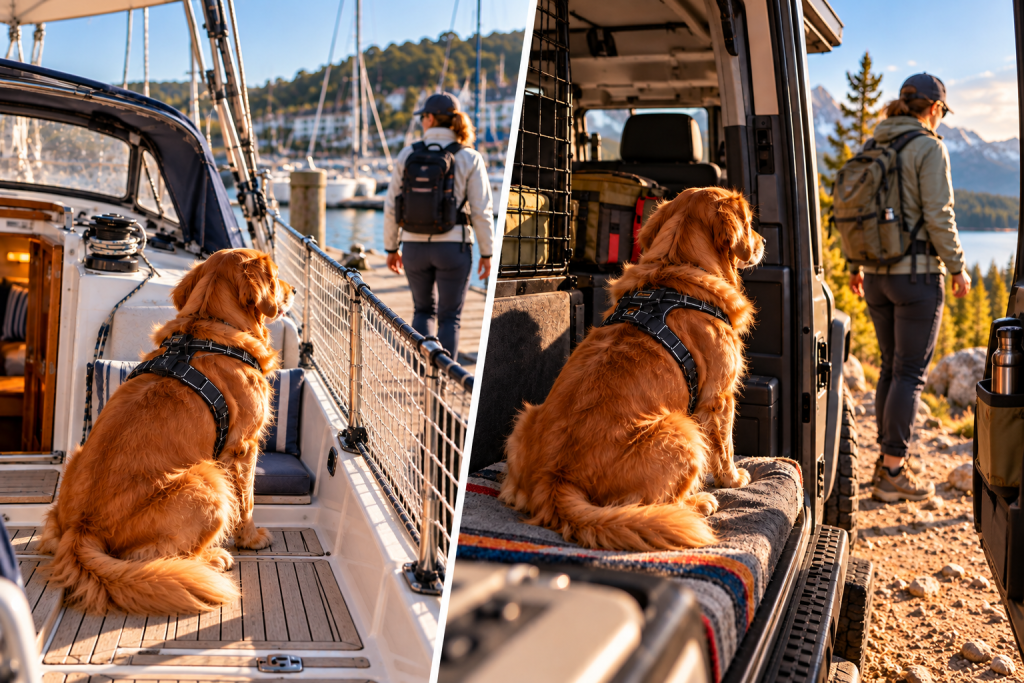
Teaching your pet to respect edges, doors, traffic zones, and other hazards.
Safety boundaries & awareness
Builds behaviour that prevents entry into dangerous areas.
🌍 All Travel Environments
What must be in place
✅ waiting before exits or transitions (doors, companionway, vehicle doors)
✅ awareness of edges, drops, and water boundaries
● recall or return response when called
✅ ability to pause or stop when directed
✅ avoidance of restricted or hazardous areas when guided
✅ no uncontrolled rushing through openings
✅ ability to remain behind barriers or boundaries
✅ predictable behaviour around moving equipment or people
✅ ability to disengage from distractions when directed
✅ response to handler cues even in stimulating environments
✅ tolerance for temporary confinement boundaries where used
✅ recovery to calm behaviour after excitement or startle
What can go wrong if not in place
⚠️ falling from height or entering water unexpectedly
⚠️ running into traffic or unsafe terrain
⚠️ entering restricted mechanical or hazardous zones
⚠️ escape during transitions or door openings
⚠️ collisions with equipment or people
⚠️ delayed handler response during emergencies
What new risks or pressures this may create
ℹ️️ excessive restriction may reduce confidence or independence
ℹ️️ inconsistent boundary rules create confusion
ℹ️️ over-reliance on barriers may reduce behaviour reliability
ℹ️️ harsh corrections may increase fear or avoidance
ℹ️️ forced exposure may damage trust
Related systems to check
● tether points & attachment points ● barriers & separation between areas ● safe escape routes
Ready to work on this area?
Find guides, checklists, how-to guidance and pathway-specific advice.
Handling, restraint & emergency control
Does my pet to accept lifting, restraint, and close handling.
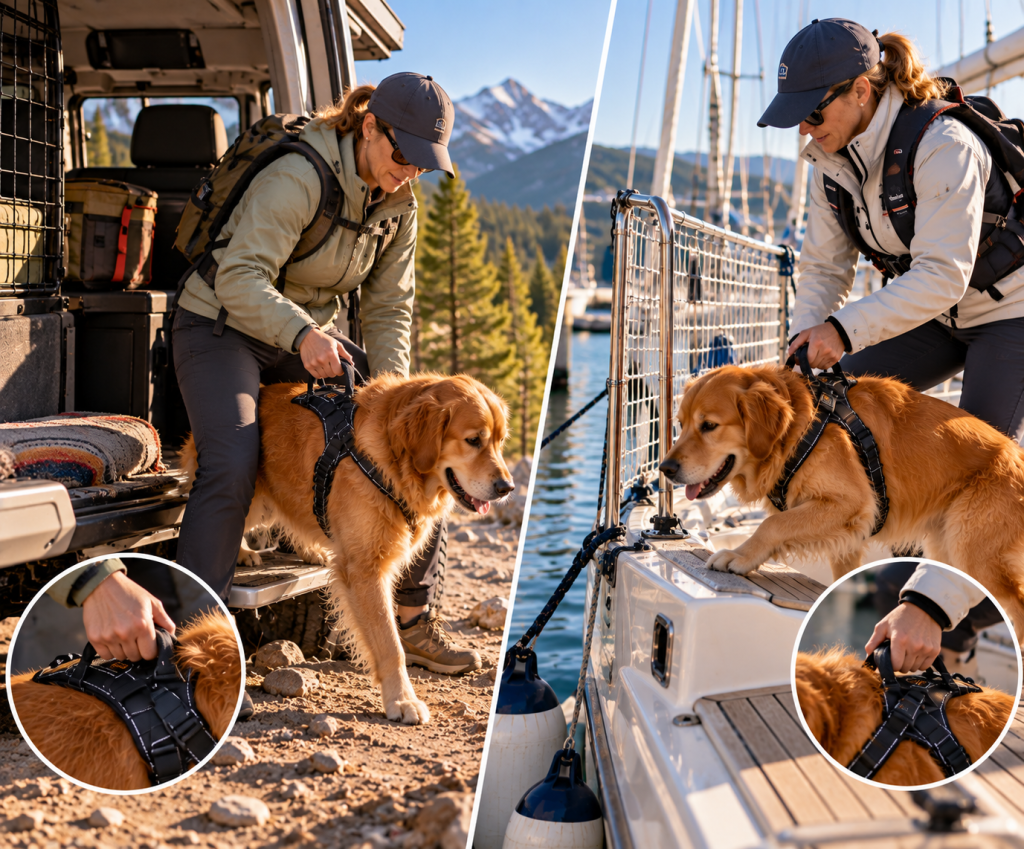
Preparing your pet to accept lifting, restraint, and close handling.
Handling, restraint & emergency control
Builds acceptance of close control when needed.
🌍 All Travel Environments
What must be in place
✅ calm acceptance of collar or harness fitting
✅ tolerance of brief restraint
✅ allows lifting if required
✅ allows basic inspection (paws, body)
✅ can be guided without struggle
✅ no aggression during normal handling
✅ recovers quickly after restraint
✅ tolerates brief restraint equipment (crate, tether, carrier)
What can go wrong if not in place
⚠️ inability to control during emergency
⚠️ injury during lifting
⚠️ bite or scratch injury to handlers
⚠️ delayed treatment
⚠️escalating fear behaviour
What new risks or pressures this may create
ℹ️️ over-handling increasing stress
ℹ️️ forced exposure damaging trust
ℹ️️ reduced confidence if restraint is excessive
Emergency context
These skills may be used during:
● Injury treatment
● Water recovery
● Evacuation
● Handling when frightened or in pain
Practising in calm conditions improves safety in real events.
Related systems to check
● tether points & attachment points ● barriers & separation between areas ● safe escape routes
Ready to work on this area?
Find guides, checklists, how-to guidance and pathway-specific advice.
🏞
Continue your readiness
Start with the areas that matter most to your pet & your journey, then review and build on them as circumstances change.
