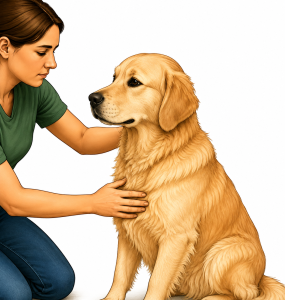
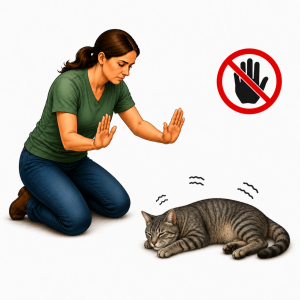
⚠️ Protect yourself. Do not restrain your dog. Approach carefully and keep your hands away from their mouth.
🚫 Do not give food, drinking water or oral medication while your dog is actively seizing.
⚠️ Only move your dog if their current location puts you or them in immediate danger, and only if you can do so safely.
Quick Summary
❶ Check — Is your dog having a seizure?
❷ Assess — Check for hazards
❸ Act now — Protect, time & manage the seizure
❹ Recheck — Has the seizure stopped?
❺ Unresponsive? — Emergency breathing / CPR steps
❻ Stable? — Observe recovery closely
❼ Vet help not available? — Remote/offshore steps
❽ Get veterinary care
Remember
✅️ Stay Calm
✅️ Protect your dog from injury
✅️ Do not restrain them
✅️ Time the seizure
✅️ Get Veterinary care
1. CHECK
Is your dog having a seizure?
Look for:
● sudden uncontrolled shaking or jerking ● stiffening of the body ● paddling movements of the legs ● collapse or loss of awareness ● drooling or frothing at the mouth ● repeated chewing or jaw movements ● loss of bladder or bowel control ● twitching affecting part of the face or body ● staring or appearing suddenly unaware of surroundings
⚠️ Protect yourself. Do not restrain your dog. Approach carefully and keep your hands away from their mouth.
2. ASSESS
Is your dog somewhere they could be injured?
Quickly look for immediate hazards such as:
● stairs, edges or drop-offs ● traffic ● open water ● hard or sharp objects ● anything that could fall onto them
If your dog has a veterinarian-prescribed emergency seizure plan or medication, access it if available.
3. — ACT NOW
A — CLEAR THE AREA
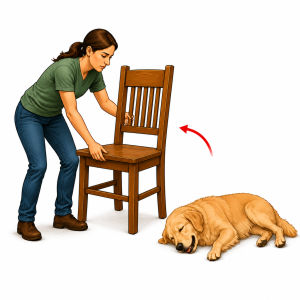
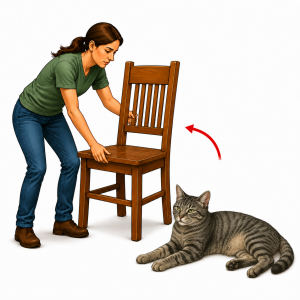
Move objects that could injure your dog.
Where practical, clear hazards from around your dog rather than moving them.
Keep them away from stairs, traffic, open water, edges, drop-offs and other hazards.
If they’re already safely on the ground, leave them there. Only move your dog if their current location puts you or them in immediate danger, and only if you can do so safely.
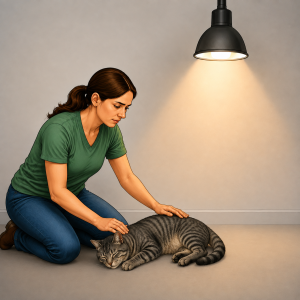
If your dog is lying on a hard surface, carefully place a folded towel, cushion or other soft item under or beside their head if you can do so safely. Keep your hands away from their mouth.
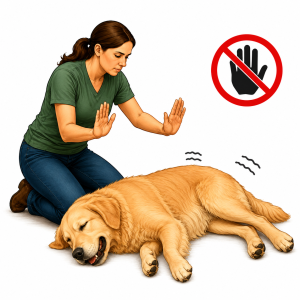
B — DO NOT RESTRAIN / KEEP AWAY FROM THE MOUTH
● Do not hold your dog down or try to stop the movements.
● Remove any muzzle they are wearing
● Keep your hands and objects away from your dog’s mouth. Your dog cannot swallow their tongue.
● Do not give food, drinking water or oral medication while your dog is actively seizing.
C — KEEP QUIET & COOL
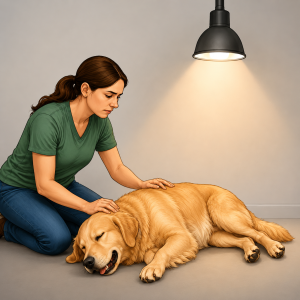
Keep the surroundings quiet.
Dim bright lights where practical.
Keep your dog cool — seizures can raise body temperature.
If your dog feels very hot, apply cool, damp cloths to the groin / paw pads and use gentle airflow or a fan if available.
Keep the area cool and well ventilated.
Do not wrap your dog in a blanket during the seizure.
D. TIME & RECORD THE SEIZURE
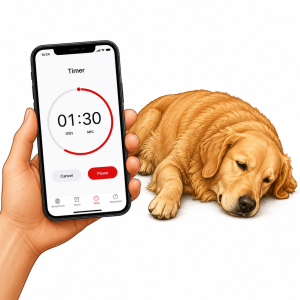
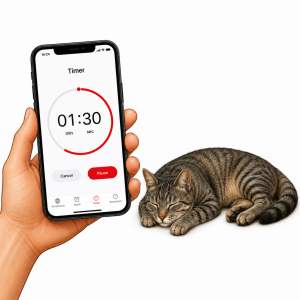
Start timing the seizure as soon as you can.
If the seizure was already happening when you found your dog, note when you first observed it. The seizure may have been going on for longer.
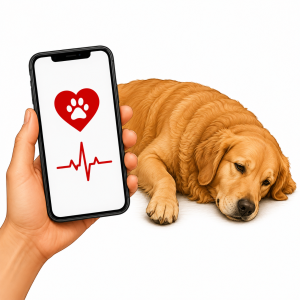
If safe and practical, record a short video for the veterinarian. Do not delay caring for your dog in order to record them.
More than 2 minutes → CONTACT A VETERINARIAN URGENTLY.
Continue protecting your dog, keep them cool and quiet, and continue timing the seizure.
If veterinary care is not immediately reachable, continue seizure first aid while contacting a veterinarian or tele-vet by the quickest available means.
E — PRESCRIBED EMERGENCY SEIZURE MEDICATION
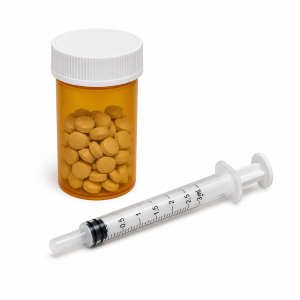
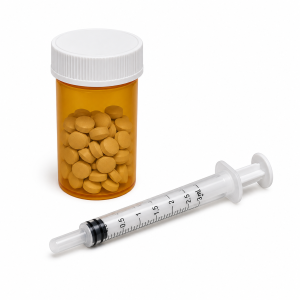
If you have access to your dog’s veterinarian-prescribed emergency seizure medication, use it only according to the emergency seizure plan and instructions previously provided by your veterinarian.
Do not give any other medication unless instructed by a veterinarian.
4. RECHECK — HAS THE SEIZURE STOPPED?
Once the seizure has stopped:
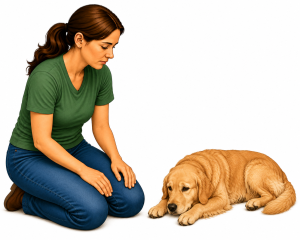
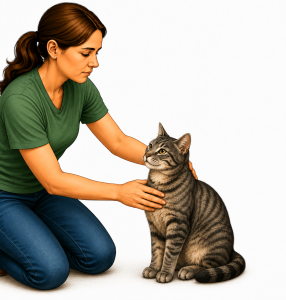
● check breathing ● check responsiveness ● continue to keep your dog cool if they are hot ● keep the surroundings quiet ● prevent falls or wandering into hazards ● allow your dog time to recover
Your dog may temporarily be confused, disorientated, unsteady or behave unusually after a seizure.
Unresponsive or not breathing normally? → Go immediately to Step 5.
5. UNRESPONSIVE / NOT BREATHING?
Is your dog unresponsive or not breathing normally?
Keep your dog calm, quiet and closely supervised while they recover.
Continue monitoring:
● breathing ● responsiveness ● ability to stand and walk ● further seizure activity ● whether their condition is improving or worsening
Do not assume the emergency has passed because your dog appears to recover.
Post-seizure effects may continue for some time after the seizure has stopped.
Keep them away from stairs, open water, drop-offs, edges and other hazards.
B. WHAT YOU MAY SEE
These signs can occur while your dog is recovering from a seizure. After a seizure your dog may temporarily be:
● confused or disorientated ● unsteady or wandering ● restless or pacing ● temporarily unable to see normally ● tired or sleepy ● unusually thirsty or hungry
Continue to supervise your dog closely while they recover.
C. GET URGENT VETERINARY HELP IF
● another seizure occurs ● a seizure lasted 5 minutes or longer ● whether your cat remains unusually hot ● seizures occur without your cat recovering between them ● breathing becomes difficult or abnormal ● gums or tongue become blue, grey or very pale ● your cat remains unresponsive ● your cat’s condition is worsening
Seek professional advice as soon as practically possible.
Follow these steps if veterinary help is not immediately available.
● Contact a veterinarian or remote veterinary service as soon as communications allow. ● Tell them your dog has had a seizure, how long it lasted and what first aid you have given.
● Continue monitoring breathing, responsiveness and gum colour.
● Keep your dog calm and minimise unnecessary exertion. ● Note the time the seizure started, how long it lasted, what you observed, whether another seizure occurred and what first aid or prescribed emergency medication was given.
● Prepare the safest and quickest practical route to veterinary care. ● If aboard, establish your position and options for returning to port or obtaining assistance. ● If travelling overland, identify the nearest reachable veterinary facility and your expected travel time.
8 — GET VETERINARY CARE
Your dog needs veterinary assessment.
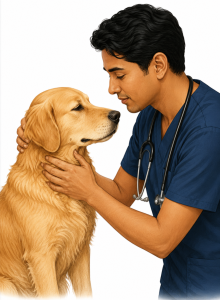
Contact a veterinarian after a seizure, even if your dog appears to have recovered.
Tell the veterinarian what happened and share the information you recorded or monitored during the emergency and recovery.
If you safely recorded a video of the seizure, tell the veterinarian it is available.
CHECK → ASSESS → PROTECT & TIME → RECHECK → MONITOR → ESCALATE IF NEEDED
REMEMBER: Do not restrain your dog. Protect them from injury and time the seizure.
A seizure lasting 5 minutes or longer, or repeated seizures without recovery between them, is a life-threatening emergency.
If your dog becomes unresponsive or stops breathing, move immediately to CPR / resuscitation.
Cat— Seizure Steps
Important safety
⚠️ Protect yourself. Do not restrain your cat. Approach carefully and keep your hands away from their mouth.
🚫 Do not give food, drinking water or oral medication while your cat is actively seizing.
⚠️ Only move your cat if their current location puts you or them in immediate danger, and only if you can do so safely.
Quick Summary
❶ Check — Is your cat having a seizure?
❷ Assess — Check for hazards
❸ Act now — Protect, time & manage the seizure
❹ Recheck — Has the seizure stopped?
❺ Unresponsive? — Emergency breathing / CPR steps
❻ Stable? — Observe recovery closely
❼ Vet help not available? — Remote/offshore steps
❽ Get veterinary care
Remember
✅️ Stay Calm
✅️ Protect your cat from injury
✅️ Do not restrain them
✅️ Time the seizure
✅️ Get Veterinary care
1. CHECK
Is your cat having a seizure?
Look for:
● sudden uncontrolled shaking or jerking ● stiffening of the body ● paddling movements of the legs ● collapse or loss of awareness ● drooling or frothing at the mouth ● repeated chewing or jaw movements ● loss of bladder or bowel control ● twitching affecting part of the face or body ● staring or appearing suddenly unaware of surroundings
⚠️ Protect yourself. Do not restrain your cat. Approach carefully and keep your hands away from their mouth.
2. ASSESS
Is your cat somewhere they could be injured?
Quickly look for immediate hazards such as:
● stairs, edges or drop-offs ● traffic ● open water ● hard or sharp objects ● anything that could fall onto them
If your cat has a veterinarian-prescribed emergency seizure plan or medication, access it if available.
3. — ACT NOW
A — CLEAR THE AREA
Move objects that could injure your cat.
Where practical, clear hazards from around your cat rather than moving them.
Keep them away from stairs, traffic, open water, edges, drop-offs and other hazards.
If they’re already safely on the ground, leave them there. Only move your cat if their current location puts you or them in immediate danger, and only if you can do so safely.
If your cat is lying on a hard surface, carefully place a folded towel, cushion or other soft item under or beside their head if you can do so safely. Keep your hands away from their mouth.
B — DO NOT RESTRAIN / KEEP AWAY FROM THE MOUTH
● Do not hold your cat down or try to stop the movements.
● Remove any muzzle they are wearing
● Keep your hands and objects away from your cat’s mouth. Your cat cannot swallow their tongue.
● Do not give food, drinking water or oral medication while your cat is actively seizing.
C —KEEP QUIET & COOL
Keep the surroundings quiet.
Dim bright lights where practical.
Keep your cat cool — seizures can raise body temperature.
If your cat feels very hot, apply cool, damp cloths to the groin / paw pads and use gentle airflow or a fan if available.
Keep the area cool and well ventilated.
Do not wrap your cat in a blanket during the seizure.
D. TIME & RECORD THE SEIZURE
Start timing the seizure as soon as you can.
If the seizure was already happening when you found your dog, note when you first observed it. The seizure may have been going on for longer.
If safe and practical, record a short video for the veterinarian. Do not delay caring for your dog in order to record them.
More than 2 minutes → CONTACT A VETERINARIAN URGENTLY.
Continue protecting your dog, keep them cool and quiet, and continue timing the seizure.
If veterinary care is not immediately reachable, continue seizure first aid while contacting a veterinarian or tele-vet by the quickest available means.
E — PRESCRIBED EMERGENCY SEIZURE MEDICATION
If you have access to your cat’s veterinarian-prescribed emergency seizure medication, use it only according to the emergency seizure plan and instructions previously provided by your veterinarian.
Do not give any other medication unless instructed by a veterinarian.
4. RECHECK — HAS THE SEIZURE STOPPED?
Once the seizure has stopped:
● check breathing ● check responsiveness ● continue to keep your cat cool if they are hot ● keep the surroundings quietkeep the surroundings quiet ● prevent falls or wandering into hazards ● allow your cat time to recover
Your cat may temporarily be confused, disorientated, unsteady or behave unusually after a seizure.
Unresponsive or not breathing normally? → Go immediately to Step 5.
5. UNRESPONSIVE / NOT BREATHING?
Is your cat unresponsive or not breathing normally?
Your cat is breathing and the seizure has stopped. They are now in the post-seizure recovery period.
A. OBSERVE
Keep your cat calm, quiet and closely supervised while they recover. Keep them safely contained indoors or in a secure enclosed area where practical.
Continue monitoring:
● breathing ● responsiveness ● ability to stand and walk ● further seizure activity ● whether their condition is improving or worsening
Do not assume the emergency has passed because your cat appears to recover.
Keep them away from stairs, open water, drop-offs, edges and other hazards.
B. WHAT YOU MAY SEE
These signs can occur while your cat is recovering from a seizure. After a seizure your cat may temporarily be:
● confused or disorientated ● unsteady or wandering ● restless or pacing ● temporarily unable to see normally ● tired or sleepy ● unusually thirsty or hungry
Continue to supervise your cat closely while they recover.
C. GET URGENT VETERINARY HELP IF
● another seizure occurs ● a seizure lasted 5 minutes or longer ● whether your cat remains unusually hot ● seizures occur without your cat recovering between them ● breathing becomes difficult or abnormal ● gums or tongue become blue, grey or very pale ● your cat remains unresponsive ● your cat’s condition is worsening
Seek professional advice as soon as practically possible.
Follow these steps if veterinary help is not immediately available.
● Contact a veterinarian or remote veterinary service as soon as communications allow. ● Tell them your cat has had a seizure, how long it lasted and what first aid you have given.
● Continue monitoring breathing, responsiveness and gum colour.
● Keep your cat calm and minimise unnecessary exertion. ● Note the time the seizure started, how long it lasted, what you observed, whether another seizure occurred and what first aid or prescribed emergency medication was given.
● Prepare the safest and quickest practical route to veterinary care. ● If aboard, establish your position and options for returning to port or obtaining assistance. ● If travelling overland, identify the nearest reachable veterinary facility and your expected travel time.
8 — GET VETERINARY CARE
Your cat needs veterinary assessment.
Contact a veterinarian after a seizure, even if your cat appears to have recovered.
Tell the veterinarian what happened and share the information you recorded or monitored during the emergency and recovery.
If you safely recorded a video of the seizure, tell the veterinarian it is available.
CHECK → ASSESS → PROTECT & TIME → RECHECK → MONITOR → ESCALATE IF NEEDED
REMEMBER: Do not restrain your cat. Protect them from injury and time the seizure.
A seizure lasting 5 minutes or longer, or repeated seizures without recovery between them, is a life-threatening emergency.
If your cat becomes unresponsive or stops breathingnormally, move immediately to CPR / resuscitation.
Dog First Aid Training Choking
Cat First Aid Training Choking
Dog — Seizure Steps
Important safety
⚠️ Protect yourself. Do not restrain your dog. Approach carefully and keep your hands away from their mouth.
🚫 Do not give food, drinking water or oral medication while your dog is actively seizing.
⚠️ Only move your dog if their current location puts you or them in immediate danger, and only if you can do so safely.
Quick Summary
❶ Check — Is your dog having a seizure?
❷ Assess — Check for hazards
❸ Act now — Protect, time & manage the seizure
❹ Recheck — Has the seizure stopped?
❺ Unresponsive? — Emergency breathing / CPR steps
❻ Stable? — Observe recovery closely
❼ Vet help not available? — Remote/offshore steps
❽ Get veterinary care
Remember
✅️ Stay Calm
✅️ Protect your dog from injury
✅️ Do not restrain them
✅️ Time the seizure
✅️ Get Veterinary care
1. CHECK & ASSESS
What is happening? — Is my dog having a seizure?
Use S.A.F.E., check your pet and surroundings, and assess what is happening.
⚠️ S.A.F.E. Before You Help
S — SCENE 👁️
Check for danger. Look for traffic, water, fire, electricity, unstable ground, cliffs, dangerous animals or other hazards.
A — APPROACH 🐾
Approach carefully. A frightened, injured, distressed pet or pet in pain may bite or scratch — even if they normally wouldn’t.
F — FIRST PROBLEM ❓
Check the immediate problem. Is your pet responsive? Can they breathe? Is there severe bleeding or another immediate danger?
E — EMERGENCY HELP 🛟
Start First Aid & get help. If someone is with you, ask them to contact a veterinarian or appropriate rescue/emergency service while you help your pet.
⚠️ Do not put yourself or anyone else in danger to reach or rescue your pet. If you cannot approach or reach them safely, get appropriate rescue assistance.
Look for:
● sudden uncontrolled shaking or jerking ● stiffening of the body ● paddling movements of the legs ● collapse or loss of awareness ● drooling or frothing at the mouth ● repeated chewing or jaw movements ● loss of bladder or bowel control ● twitching affecting part of the face or body ● staring or appearing suddenly unaware of surroundings
⚠️ Protect yourself. Do not restrain your dog. Approach carefully and keep your hands away from their mouth.
Look more closely and prepare to give First Aid safely.
Quickly look for immediate hazards such as:
● stairs, edges or drop-offs ● traffic ● open water ● hard or sharp objects ● anything that could fall onto them
If your dog has a veterinarian-prescribed emergency seizure plan or medication, access it if available.
3. BE AWARE — DO / DO NOT
What should I do — and avoid?
Know the critical safety rules before you begin.
DO
● do#1 ● do#1 ● do#1 ● do#1 ● do#1
DO NOT:
● do not #1 ● do not #1 ● do not #1 ● do not #1 ● do not #1
4. — ACT NOW
How do I give Seizure First Aid?
Follow the first aid steps in order.
Refer to step 4F for special situations that need changes for the standard first aid for chocking
A — CLEAR THE AREA
Move objects that could injure your dog.
Where practical, clear hazards from around your dog rather than moving them.
Keep them away from stairs, traffic, open water, edges, drop-offs and other hazards.
If they’re already safely on the ground, leave them there. Only move your dog if their current location puts you or them in immediate danger, and only if you can do so safely.
If your dog is lying on a hard surface, carefully place a folded towel, cushion or other soft item under or beside their head if you can do so safely. Keep your hands away from their mouth.
B — DO NOT RESTRAIN / KEEP AWAY FROM THE MOUTH
● Do not hold your dog down or try to stop the movements.
● Remove any muzzle they are wearing
● Keep your hands and objects away from your dog’s mouth. Your dog cannot swallow their tongue.
● Do not give food, drinking water or oral medication while your dog is actively seizing.
C — KEEP QUIET & COOL
Keep the surroundings quiet.
Dim bright lights where practical.
Keep your dog cool — seizures can raise body temperature.
If your dog feels very hot, apply cool, damp cloths to the groin / paw pads and use gentle airflow or a fan if available.
Keep the area cool and well ventilated.
Do not wrap your dog in a blanket during the seizure.
D. TIME & RECORD THE SEIZURE
Start timing the seizure as soon as you can.
If the seizure was already happening when you found your dog, note when you first observed it. The seizure may have been going on for longer.
If safe and practical, record a short video for the veterinarian. Do not delay caring for your dog in order to record them.
More than 2 minutes → CONTACT A VETERINARIAN URGENTLY.
Continue protecting your dog, keep them cool and quiet, and continue timing the seizure.
If veterinary care is not immediately reachable, continue seizure first aid while contacting a veterinarian or tele-vet by the quickest available means.
E — PRESCRIBED EMERGENCY SEIZURE MEDICATION
If you have access to your dog’s veterinarian-prescribed emergency seizure medication, use it only according to the emergency seizure plan and instructions previously provided by your veterinarian.
Do not give any other medication unless instructed by a veterinarian.
4. RECHECK — HAS THE SEIZURE STOPPED?
Once the seizure has stopped:
● check breathing ● check responsiveness ● continue to keep your dog cool if they are hot ● keep the surroundings quiet ● prevent falls or wandering into hazards ● allow your dog time to recover
Your dog may temporarily be confused, disorientated, unsteady or behave unusually after a seizure.
Unresponsive or not breathing normally? → Go immediately to Step 5.
5. UNRESPONSIVE / NOT BREATHING?
Is your dog unresponsive or not breathing normally?
Keep your dog calm, quiet and closely supervised while they recover.
Continue monitoring:
● breathing ● responsiveness ● ability to stand and walk ● further seizure activity ● whether their condition is improving or worsening
Do not assume the emergency has passed because your dog appears to recover.
Post-seizure effects may continue for some time after the seizure has stopped.
Keep them away from stairs, open water, drop-offs, edges and other hazards.
B. WHAT YOU MAY SEE
These signs can occur while your dog is recovering from a seizure. After a seizure your dog may temporarily be:
● confused or disorientated ● unsteady or wandering ● restless or pacing ● temporarily unable to see normally ● tired or sleepy ● unusually thirsty or hungry
Continue to supervise your dog closely while they recover.
C. GET URGENT VETERINARY HELP IF
● another seizure occurs ● a seizure lasted 5 minutes or longer ● whether your cat remains unusually hot ● seizures occur without your cat recovering between them ● breathing becomes difficult or abnormal ● gums or tongue become blue, grey or very pale ● your cat remains unresponsive ● your cat’s condition is worsening
Seek professional advice as soon as practically possible.
Follow these steps if veterinary help is not immediately available.
● Contact a veterinarian or remote veterinary service as soon as communications allow. ● Tell them your dog has had a seizure, how long it lasted and what first aid you have given.
● Continue monitoring breathing, responsiveness and gum colour.
● Keep your dog calm and minimise unnecessary exertion. ● Note the time the seizure started, how long it lasted, what you observed, whether another seizure occurred and what first aid or prescribed emergency medication was given.
● Prepare the safest and quickest practical route to veterinary care. ● If aboard, establish your position and options for returning to port or obtaining assistance. ● If travelling overland, identify the nearest reachable veterinary facility and your expected travel time.
8 — GET VETERINARY CARE
Your dog needs veterinary assessment.
Contact a veterinarian after a seizure, even if your dog appears to have recovered.
Tell the veterinarian what happened and share the information you recorded or monitored during the emergency and recovery.
If you safely recorded a video of the seizure, tell the veterinarian it is available.